
Looking for the Things Around Us Class 3 chapter? This page gives you the official NCERT Class 3 Environmental Studies PDF — the chapter NCERT prints as Chapter 10, “This World of Things”, in the Our Wondrous World book (revised 2026-27 edition, printed pages 120–133).
The official file is right below, followed by a plain-language walkthrough: where an object’s material comes from, transparent and opaque things, solids and liquids, and natural versus artificial.
Download the Things Around Us Class 3 PDF
The official file for this chapter is hosted on the NCERT portal, which keeps every chapter of the Our Wondrous World book available free of charge. It contains Khushi’s classroom story, the activities and the closing exercises A–D exactly as printed, with every picture in place.
Open the NCERT Class 3 Our Wondrous World Chapter 10 Things Around Us PDF to read the full chapter in its original layout — the drawings, activity tables and exercises this page explains, all in the official NCERT version.
Chapter 10 at a glance
The chapter mixes Khushi’s classroom story, observation activities, teacher notes, and a closing exercise with parts A (Write), B (Discuss), C (Draw) and D (Do it).
| What the chapter holds | How many |
|---|---|
| Printed pages in the book | 14 |
| Numbered activities | 6 |
| Tables and sorting charts | 4 |
| Drawings and photographs | 37 |
| Notes written for the teacher | 3 |
What this chapter covers
The chapter moves in one clear order, and each idea lands on known pages of the book. Use this map to open the part you need.
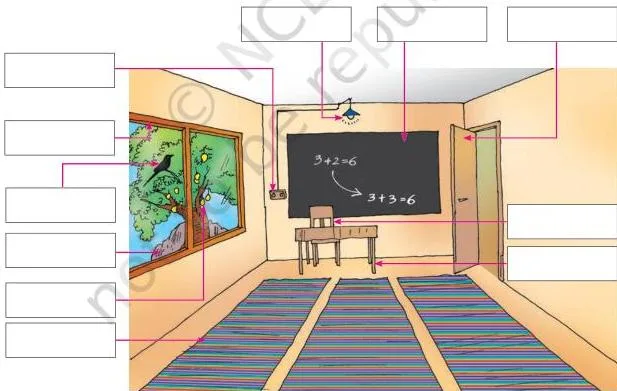
- Naming the objects in Khushi’s classroom drawing — and noticing the window glass (NCERT p. 123).
- Where materials come from: wood from trees, metals from ore dug from inside the Earth, glass mostly from sand (NCERT pp. 124, 128).
- Transparent, translucent and opaque: what you can see through and what you cannot (NCERT pp. 125–127).
- Properties beyond sight: shiny and dull, smooth and rough, cold, noisy or quiet, bendable or rigid (NCERT pp. 129–130).
- Solid, liquid and gas: does it keep its shape or does it flow? (NCERT pp. 131–132).
- Natural versus artificial, with the closing exercises A–D (NCERT p. 133).
The big ideas in order
These are the chapter’s five core ideas, in the order the book teaches them. Each one starts with the question the book is answering.
Every object is made of a material — and materials come from somewhere
The first idea is the easiest to miss: the object in your hand and the material it is made of are not the same thing. The table is an object; wood is the material. The whole chapter depends on keeping those two apart.
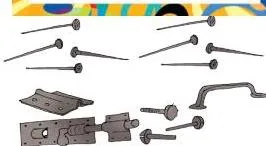
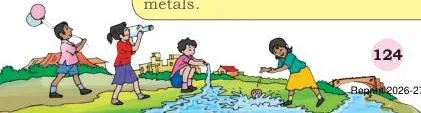
Khushi asks three questions about everything in her classroom: where have these things come from, who made them, and what are they made of (NCERT p. 124). The chapter answers with examples: the table and chair are made of wood, and the door hinges, nails and latches are made of metals.
Wood comes from trees. Metals are carefully extracted from a rock-and-sediment mixture called ore, dug up from inside the Earth (NCERT p. 124).
| Material | Where it comes from in nature |
|---|---|
| Wood | Trees |
| Metal | Ore — rock and sediment dug from inside the Earth |
| Glass | Mostly sand |
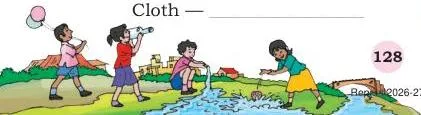
| Cloth | Left open in the book — the blank is for you to find out |
Metals you might recognise include iron, copper, aluminium, gold and silver; steel, brass and bronze are alloys, which are mixtures of metals (NCERT p. 124). The Chain Game (NCERT p. 128) is the activity that practises this grouping: Khushi lists objects, you name the material, and you add objects of your own, such as clay or rubber, in a new row.
Transparent, translucent, opaque: what light does with materials
These three words answer one question: what happens to light when it meets a material? Khushi understands the idea before she knows the words.
Looking at a flower-laden tree, Khushi reaches out to touch it — and her hand hits the glass pane. She had been seeing the flowers through the window all along without noticing the glass (NCERT p. 125).
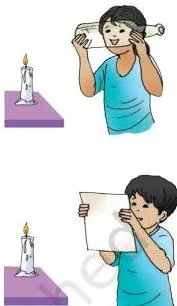
The chapter then sorts materials by how well you can see through them. Transparent means you can see through clearly, like most kinds of glass. Opaque means you cannot see through at all, like wood. Translucent means you can see through only partially (NCERT p. 126).
Transparency is not the same as colourlessness. In the colour activity, you look at white paper through coloured bags, bottles or thin cloth: the paper’s colour seems to change, but you still see the paper (NCERT p. 127). Coloured glass stays transparent — it only changes what you see.
One rule matters more than the activity: never look at the sun, directly or through any object, because it will harm your eyes (NCERT p. 126). When the book asks you to test see-through materials, look at a light bulb or a candle flame instead.
Touch, sound and bend: properties that decide what an object is for
Sight is not the only way to know a material. The chapter gives you three more tests — touch, sound and bending — that work even with your eyes closed.
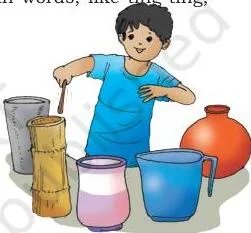
Your spoon can be described by how it feels and looks: smooth or rough, dull or shiny, and it feels cold to the touch (NCERT p. 129). In the orchestra activity, you tap five objects — wood, metal, plastic, cloth and glass — with a metal spoon and listen: each material “speaks” with its own sound, like ting-ting or dhum-dhum (NCERT p. 130).
| Property | What it tells you | Chapter example |
|---|---|---|
| Smooth / rough | How the surface feels | Spoon words (NCERT p. 129) |
| Dull / shiny | How the surface catches light | Spoon words (NCERT p. 129) |
| Cold to the touch | A common clue for metal | Metal spoon (NCERT p. 129) |
| Sound on tapping | Each material sounds different | Orchestra: ting-ting, dhum-dhum (NCERT p. 130) |
| Hard and rigid / soft and flexible | Whether the material bends | Wood vs fabric (NCERT p. 130) |
| Keeps its shape / flows | Whether it pours and spreads | Walls and water (NCERT p. 131) |
In “Does it Bend?”, wood is hard and rigid while fabric is soft and flexible — which is exactly why clothes and curtains are made of fabric and not wood (NCERT p. 130). The Odd Pairs game uses properties to judge jobs: an umbrella made of paper would tear in the rain, so the material does not suit the object.
Solid, liquid and gas: does it keep its shape or flow?
The chapter’s starting line is playful — walls cannot be made of water. That one joke teaches the whole idea: some things keep their shape, and some do not.
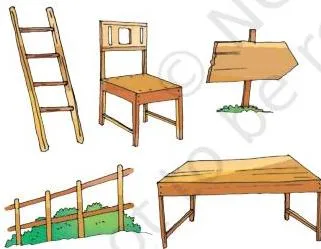
Things that do not change their shape are solids — stones, bricks and wood make walls. Water does not keep its shape; it flows, and poured into a cup it stays there, which makes it a liquid. Air flows too, but differently: it does not stay in a cup, it floats in and out, which makes it a gas (NCERT p. 131).
Activity 6 (NCERT p. 132) asks you to sort ten objects into a tray (solid), a bottle (liquid) and a balloon (gas): ink, a stone, smoke, ice, steam, a spoon, honey, a bottle, a bag, water. Here is the full walkthrough.
| Object | Where it goes | Why |
|---|---|---|
| Stone, spoon, ice, bottle, bag | Tray — solid | Each keeps its own shape |
| Ink, honey, water | Bottle — liquid | They flow and take the shape of the container |
| Smoke, steam | Balloon — gas | They spread out and do not stay where they are put |
Ice is a solid: it keeps its shape even though it can melt into water. Steam is water as a gas, not liquid water. The chapter deliberately adds sand, sponge and clay because they are the confusing ones.
Sand pours like a liquid, but every grain is a solid. A sponge squashes but is still solid. Clay changes shape in your hands, but it does not pour or flow (NCERT p. 132). The rule to check: does each bit keep its own shape? If yes, it is a solid no matter how it behaves.
Natural and artificial: who made it?
The last sorting is the biggest: who made it? Khushi’s mango tree answers it without words.
Khushi drew a mango tree with a mango and a bird on it. The tree, the mango and the bird are not made by humans — they exist naturally, so they are natural. Khushi’s picture of them is made by people, so it is artificial (NCERT p. 133).
Natural things may be alive, like plants and animals, or not alive, like rocks, water and air. Artificial things are made by people, like clothes, shoes and tables.
Three questions settle almost every case:
- Who made it? Nature, or a person?
- Where did it come from? A tree, an animal, the ground — or a factory?
- Was it ever alive? Living natural things and non-living natural things are both natural.
One line is blurry, and the book says so: rubber, fibre and wax occur naturally — bees make wax for their honeycomb — but very similar materials are also made artificially from petroleum, a liquid found deep underground (NCERT p. 132). Petrol, plastic, rubber and paraffin wax are petroleum-based.
Exercise C (NCERT p. 133) asks you to draw three natural and three artificial things — a chance to use the rule.
Reading the pictures in this chapter



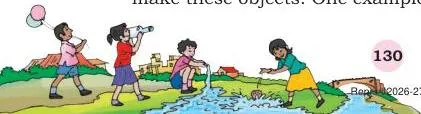
This chapter teaches through its pictures as much as its words. The drawings stay in your book, so open it to these pages and look at each one with a question in mind.
- Khushi’s classroom drawing (NCERT p. 123). Name every object and write it in the boxes, then stop at the window: can you see through the glass or not? That question is the bridge to transparent and opaque.
- The solid, liquid and gas sorting picture (NCERT p. 131). The three labels Solid, Liquid and Gas head the picture. Decide which column each object belongs in, then read why water walls fall.
- The tray, bottle and balloon picture for Activity 6 (NCERT p. 132). Each object’s name is written in the picture. Check where ink, stone, smoke, ice, steam, spoon, honey, bottle, bag and water land, then add your own objects.
- The mango tree picture (NCERT p. 133). The tree, mango and bird are natural; the drawing of them is artificial. The picture also asks a quiet question: mango season — did Khushi draw this around January or around June?
The words this chapter wants you to know
These are the chapter’s key words, written for a Class 3 reader. Each meaning comes from how the book uses the word.
| Word | What it means here | Where it appears |
|---|---|---|
| Material | What an object is made of — wood is the material a table is made of | Chain Game, NCERT p. 128 |
| Ore | Rock and sediment dug from inside the Earth, from which metals are extracted | Do you know?, NCERT p. 124 |
| Alloy | A mixture of metals, such as steel, brass and bronze | Note to the Teacher, NCERT p. 124 |
| Transparent | Can be seen through clearly, like glass | Seeing through things, NCERT p. 126 |
| Translucent | Can be seen through only partially | Seeing through things, NCERT p. 126 |
| Opaque | Cannot be seen through at all, like wood | Seeing through things, NCERT p. 126 |
| Solid | Keeps its shape, like a stone | Does it Flow?, NCERT p. 131 |
| Liquid | Flows and stays in a cup, like water | Does it Flow?, NCERT p. 131 |
| Gas | Flows and spreads, floating in and out of an open cup, like air | Does it Flow?, NCERT p. 131 |
| Natural | Exists in nature, not made by people — plants, animals, rocks, water, air | Natural — Artificial, NCERT p. 133 |
| Artificial | Made by people — clothes, shoes, tables | Natural — Artificial, NCERT p. 133 |
Where students get confused — and what to say instead
Five confusions catch almost every Class 3 reader of this chapter. Here is each one with the correction the book supports.
| Mistake | Correct rule | How to check your answer |
|---|---|---|
| “Transparent means colourless.” | Transparent means you can see through it. Coloured glass is still transparent — it just changes what you see (NCERT p. 127). | Look at white paper through thin coloured plastic: you still see the paper, so the plastic is transparent. |
| “Anything shiny is made of metal.” | Shiny paint on plastic can look like metal. Use other clues: cold to the touch, the sound when tapped, and asking an elder (NCERT pp. 129, 133). | Hold it, tap it, ask an elder. Exercise B on NCERT p. 133 is this exact question. |
| “Sand, sponge and clay are not solids.” | They are solids that behave confusingly: sand pours, a sponge squashes, clay changes shape — but each still keeps its own shape (NCERT p. 132). | Ask: does one grain of sand keep its shape? Yes. Does clay pour out of a cup? No. |
| “Air is nothing because we cannot see it.” | Air is a gas. It flows and floats in and out of an open cup, unlike water which stays in the cup (NCERT p. 131). | Hold an open cup: nothing drops out, because air drifts in and out. |
| “The object and its material are the same.” | The table is the object; wood is the material it is made of (NCERT p. 128). | Name the object first, then ask “What is it made of?” — you get two different answers. |
How to use this chapter at home
This chapter needs no special equipment — it is written to be done with things already in your house. Follow the book’s activities in the order they work best.
- Try the see-through ordering with household objects (NCERT p. 126) — from see-through clearly to cannot see through at all — and keep to the sun safety rule while you do it.
- Do the colour activity: look at white paper through coloured plastic or cloth (NCERT p. 127).
- Add a clay or rubber row to Khushi’s Chain Game (NCERT p. 128), and leave the cloth source blank — the book asks you to find it out.
- Turn “Talk to your Grandparents” (NCERT p. 129) into five questions: Were tables, chairs and spoons made of the same materials in their childhood? Which materials around you today did they never see as children? Which materials from their childhood are no longer used, and why? What was their everyday spoon made of? Did their school have glass windows?
- Make an orchestra: tap five objects — wood, metal, plastic, cloth and glass — with a metal spoon and give each sound a word (NCERT p. 130).
- Play Odd Pairs: five objects paired with a material that will not work for them, with the reason (NCERT p. 130).
- Sort the ten objects of Activity 6 into tray, bottle and balloon, and add a few of your own (NCERT p. 132).
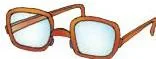
- Finish with exercises A–D (NCERT p. 133): write three common materials, discuss how to test a shining spoon, draw three natural and three artificial things, and match transparent, translucent and opaque — spectacles glass, a paper lamp shade and a plate.
Textbook contents and the examinable syllabus are not always identical — check the current official syllabus for how this chapter is used in your school.
What to remember from this chapter
A night-before recap, in the chapter’s own order of ideas:
- Every object is made of a material.
- Materials come from nature.
- Wood comes from trees, metals come from ore, and glass is mostly made of sand.
- Transparent, translucent and opaque describe how well you can see through a material.
- Materials may be smooth, rough, dull, shiny, cold, noisy or quiet.
- Hard, rigid materials and soft, flexible ones suit different jobs.
- Solids keep their shape; liquids pour and stay in a cup; gases spread and float out.
- Natural things are not made by people — they may be alive or not alive.
- Artificial things are made by people: clothes, shoes, tables.
- Never look at the sun, directly or through anything.
Related resources: this unit in the Our Wondrous World book
Chapter 10 is the first of three chapters in this unit of Our Wondrous World. It leads into Chapter 11, Making Things, which explores how houses are built from natural resources and how people design new things, and Chapter 12, Taking Charge of Waste, about sorting waste and reusing and recycling it.
- See the Making Things chapter notes for the next chapter in the unit.
- Visit the Class 3 Environmental Studies notes page for the other chapters of this book.
- Browse the Class 3 hub for every Class 3 subject, or the full CBSE notes index.
- For another Class 3 Environmental Studies chapter on this site, open the Staying Healthy and Happy chapter notes.
Sources and data verification
The chapter described here is from the NCERT Class 3 Environmental Studies textbook Our Wondrous World, revised 2026-27 edition: Chapter 10, printed as “This World of Things” on pages 120–133. This page covers only this chapter, not Chapter 11 or Chapter 12, which belong to the same unit of the book.
This listing is maintained for the academic session 2026-27 using the NCERT information available on the official portal, ncert.nic.in. NCERT settles textbooks, editions and chapter PDFs; CBSE settles the curriculum, syllabus and examinations. Textbook contents and the examinable syllabus are not always identical — check the current official syllabus.
| What the chapter holds | Count | Where it is used |
|---|---|---|
| Printed pages | 14 | |
| Figures with NCERT captions | 21 | |
| Tables | 4 | |
| Activities | 6 | |
| Official NCERT PDF | Download the chapter PDF | the chapter exactly as NCERT publishes it |
Reference: NCERT Class 3 Environmental Studies textbook, chapter 10, official edition on ncert.nic.in.
Things Around Us Class 3: common questions
Is coloured glass transparent too?
Yes — transparent means you can see through a material, not that it has no colour. In the colour activity, white paper seen through coloured plastic still shows through; it only looks tinted (NCERT p. 127). Coloured glass behaves the same way: it stays transparent while changing what you see.
Is air really a gas if we cannot see it?
Yes. A gas does not need to be visible. Air flows — but unlike water poured into a cup, air does not stay there; it floats in and out of an open cup, and that is the book’s test for a gas (NCERT p. 131).
How can you check whether a shining spoon is made of metal?
Do not decide from shine alone — shiny paint on plastic can look just like metal. The book’s clues are: metals usually feel cold to the touch, they sound different when tapped, and you can ask an elder if you are unsure (NCERT pp. 129, 133). Exercise B of the chapter is this exact question.
Are plastic and rubber natural or artificial?
Plastic is artificial — it is made by people from petroleum. Rubber is a blurry case: natural rubber comes from nature, but very similar rubber is also made artificially from petroleum, so the answer depends on the object (NCERT p. 132). The same is true of wax — bees make it, and factories make a similar wax from petroleum.
Why should we never look at the sun through anything?
Because it will harm your eyes. The book’s rule is absolute: never look at the sun continuously, directly or through any object (NCERT p. 126). When you test see-through materials, look at a light bulb or a candle flame instead.
Is Chapter 10 called Things Around Us or This World of Things?
Both names point to the same chapter. The book prints the chapter title as “This World of Things”, and the unit that holds it is called “Things Around Us”.
Since the unit name matches what the chapter is about, most students and parents look for this chapter as “Things Around Us” — the official NCERT file is the same one either way.
Explore Class 3 Environmental Studies Books
- Previous: Staying Healthy and Happy
- Next: Making Things
Related chapters:
- Our Families and Communities
- Going to the Mela
- Celebrating Festivals