
Looking for the Staying Healthy and Happy Class 3 chapter? This page has the official NCERT EVS chapter 9 PDF from the Our Wondrous World book, printed on NCERT pages 108 to 120. Below the link you will find a plain-language map of the chapter — what each page teaches, the activities it asks for, and the answers to its puzzles.
This page is maintained for the 2026-27 academic session.
Download the Staying Healthy and Happy Class 3 NCERT chapter PDF from the official NCERT textbook portal to open the chapter in its original printed layout, with every picture, activity and puzzle exactly as it appears in the book.
Chapter at a glance
The chapter table on this page lists the file’s sections, activities, figures and teacher notes in one glance. What matters more is what the chapter actually does with them.
Staying Healthy and Happy is an activity-based chapter. Its learning sits in daily-routine lists, a home-cleaner activity, movement games, two puzzles, a weekly health table and a 24-hour circle drawing task. The book teaches through doing and pictures rather than a numbered exercise set.
The chapter works in pictures rather than formal diagrams, and the main spreads close with a Note to the Teacher box explaining how to discuss the page in class. The two printed tables are the I Spy letter grid and the weekly health table.
What this chapter covers, page by page
Use this section as a route map. Each bullet names one part of the chapter and the printed page where it starts, so you can jump straight to the page you need in the PDF.
- Chapter opener — p. 108: why healthy bodies and minds work properly, and the simple habits that keep them free from disease.
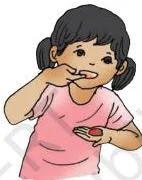
- Clean and Bright — p. 109: five self-check questions — brushed your teeth, taken a shower, combed your hair, washed your hands with soap, nails trimmed and clean?
- Write — p. 109: make your own list of daily activities, from waking to sleeping.
- Check your list — pp. 109–110: the habit checks — brush twice, rinse after every meal, wash hands with soap after the toilet and after coming home.
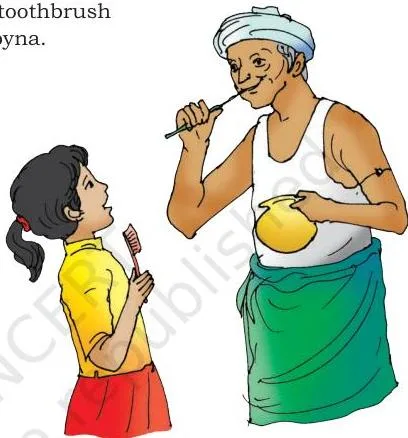
- How do we Brush our Teeth? — pp. 110–111: Moyna’s Dadu chews a fresh neem or babool twig into a brush and massages his gums.
- Do you know? — pp. 111–112: datun, and the Indian tradition behind the modern toothbrush.
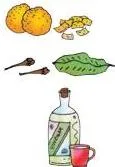
- Making a home-cleaner using orange and lemon peels — p. 112: the eco-friendly cleaner recipe.
- Animals like to keep themselves clean too — pp. 112–113: monkeys grooming each other and birds cleaning their feathers with their beaks.
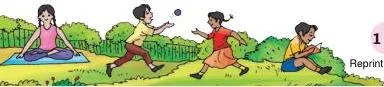
- Playing Outdoors and Indoors too — p. 113: why running makes you breathe faster and deeper.
- Hop, skip, jump! — pp. 113–114: movement games and skipping-rope play with friends.
- Name the Game! — pp. 114–115: look at the pictures and identify the games shown.
- I Spy! — pp. 115–116: the letter grid with hidden game names.
- Playing Safely — pp. 116–117: sorting safe and unsafe places to play.
- The safety note — pp. 117–118: strangers, and paying attention to your surroundings.
- A. Write — pp. 118–119: the weekly health table.
- B. Draw — pp. 119–120: the 24-hour circle.
- C. Discuss — p. 120: choosing an activity to build stamina.
- Closing teacher note — p. 120: how to divide a circle into 24 by hand, with the I Spy answers.
Staying Healthy and Happy Class 3: the seven daily habits it tracks
This chapter is about doing, not memorising: it turns health into a daily checklist a child can follow. The seven habits below are the ones the chapter’s own lists track, on NCERT pages 109 and 110.
| Habit | What the chapter says | Page |
|---|---|---|
| Brush twice a day | Once after waking up and once before going to bed | pp. 109–110 |
| Take a shower | Part of the daily routine list | p. 109 |
| Comb your hair | Part of the Clean and Bright self-check | p. 109 |
| Wash hands with soap | After using the toilet and after coming home from outdoors | p. 110 |
| Keep nails trimmed and clean | Part of the Clean and Bright self-check | p. 109 |
| Drink 6–8 glasses of water | Part of the daily routine list | p. 109 |
| Sleep at least 8 hours | Sleep well for at least 8 hours in total | p. 109 |
The chapter’s daily list also includes eating food and playing outside (p. 109), and its check list adds rinsing your mouth after every meal (pp. 109–110). If a habit is hard to follow, the book asks the child to think and discuss what makes it difficult — the point is to build the habit, not to feel guilty about missing it.
Why these habits matter. The chapter opens by saying that simple habits keep the body clean and free from disease (p. 108). When you run fast to catch your friends, you breathe faster and deeper, your cheeks feel warm and you start to sweat — that is exercise making your heart work harder and better (p. 113).
Sleepiness, hunger or tiredness are the body’s way of telling us that something is amiss (p. 119); the habits are how we answer those signals.
The teacher’s note on p. 114 lists the three types of exercise the body needs: one that strengthens the cardio-respiratory system (the heart and lungs), one that adds strength to the muscles and bones, and one that maintains flexibility.
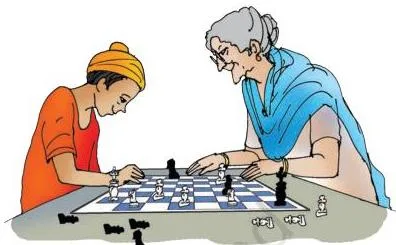
Harpreet’s grandmother, who cannot move much because of knee pain, still walks a little around the house and plays chess — a reminder that the mind and body should both stay active.
Pictures, games and the 24-hour circle: what to look for
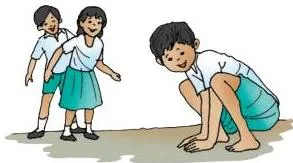
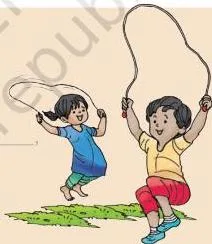
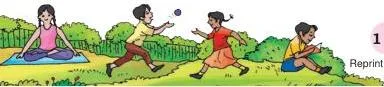
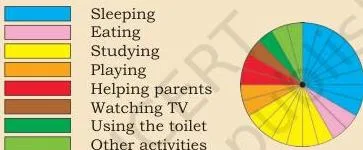
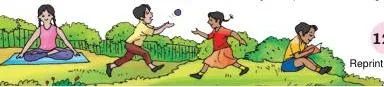
This chapter carries much of its learning in pictures and puzzles rather than formal diagrams, so look at the illustrations in your own book as you work through them — the NCERT images are not reproduced on this page.
Name the Game! (pp. 114–115)
The book shows a set of game pictures and asks: can you identify the games shown here? Try naming each one with your family, and talk about whether you have played each of them before.
I Spy! (pp. 115–116)
The I Spy grid is a word search — a box of letters hiding game names, with one answer already filled in for you. The ten hidden games, as the book’s teacher note gives them on p. 120, are:
- badminton
- basketball
- cricket
- football
- gymnastics
- hockey
- kabaddi
- khokho
- tennis
- volleyball
The trick is to hunt both across and down the grid. Two answers read straight left to right in the final two rows: football in the second-last row and kabaddi in the last row; the rest are mixed among the letters.
B. Draw — the 24-hour circle (pp. 119–120)
The drawing task asks you to divide a big circle into 24 slices, one for each hour of the day, and colour the slices by the hours you spend on each activity. Moyna’s own example is in the book on page 119 — make your own instead of copying her numbers. Here is a worked example with different numbers that still add to 24:
- 9 hours sleeping
- 6 hours at school and studying
- 3 hours eating
- 2 hours playing outdoors
- 1 hour helping at home
- 1 hour on TV or phone
- 2 hours on other activities
Total: \(9+6+3+2+1+1+2 = 24\). Colour 9 slices for sleep, 6 for school and study, and so on — every slice of the circle is one hour, so the numbers must always add to 24.
To draw 24 equal slices by hand, the teacher’s note (p. 120) suggests: first cut the circle into four quarters, divide each quarter into 3 equal parts (giving 12), then halve each part to reach 24.
Words and ideas in this chapter, explained simply
The chapter uses a handful of words a young reader may meet for the first time. This table gives each a plain meaning, with the page where it appears.
| Word | Plain meaning | Page |
|---|---|---|
| datun | The Indian habit of chewing a fresh twig into a soft brush to clean teeth; the chapter says the modern idea of brushing came from this tradition | pp. 111–112 |
| neem and babool | Trees whose twigs Moyna’s Dadu uses — the neem twig is bitter, the babool twig tastes better | p. 111 |
| karanj | Another tree whose twigs can be used for a datun | p. 112 |
| reetha and shikakai | Traditional plant-based cleansers for hair, named in the teacher’s note | p. 112 |
| eco-friendly | Kind to the environment — the orange and lemon peel cleaner replaces bought chemical cleaners | p. 112 |
| stamina | The ability to keep running, jumping or climbing without tiring quickly | p. 120 |
| cardio-respiratory | To do with the heart and lungs — the first of the three exercise types the body needs | p. 114 |
Where families usually go wrong
These are the places where the chapter’s message most often gets shortened or missed at home. Each row names the common belief, what the chapter actually says, and the quick check that catches it.
| Common misconception | What the chapter actually says | How to check yourself |
|---|---|---|
| Brushing once a day is enough | Brush twice — once after waking and once before bed — and rinse your mouth after every meal (pp. 109–110) | Can you tick both brush times for a full week in the health table? |
| Hands only need washing before eating | Wash hands with soap after using the toilet and after coming home from outdoors (p. 110) | Do you wash the moment you come in, before touching food? |
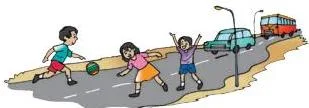
| Any open ground is fine to play in | A park and a schoolground are safe; a busy road, a roof without railings and a construction site are unsafe (p. 117) | Ask: is this place meant for play, and is a trusted adult around? |
| Exercise means only sports class | Walking, moving around the house and even chess keep the mind and body active (pp. 114–115) | Does your day include movement outside sports class? |
| Feeling sleepy, hungry or tired is just a bad mood | Feelings are the body’s way of telling us that something is amiss (p. 119) | When you feel off, ask: did I sleep, eat and play enough today? |
| One cleaning routine is right for everyone | Routines vary with where you live and access to water — habits are compared without judging (p. 112) | Can a friend’s different routine still be a healthy one? |
How this chapter is checked in class
Class 3 EVS has no board exam, so this section is about classroom assessment, not marks. The chapter itself gives teachers a clear check: the teacher’s note on p. 119 says completing the weekly health table is a form of assessment for the chapter.
The work a teacher can see from this chapter includes the daily-routine list (p. 109), the home-cleaner activity (p. 112), the movement games (pp. 113–114), the I Spy puzzle (p. 116), the 24-hour circle drawing (pp. 119–120) and the stamina discussion (p. 120).
The weekly table works best filled in day by day, because its real purpose — as the teacher’s note on p. 119 explains — is to spot patterns connecting good sleep, diet and exercise with feeling good.
One honest caveat: textbook contents and the examinable syllabus are not always identical, so check the current official syllabus on cbse.gov.in before treating any chapter as exam material.
The chapter in one screen
The chapter prints no summary box, so here is one built from its own pages — everything a final read should hold on to.
- Keep the seven daily habits: brush twice, take a shower, comb your hair, wash hands with soap, keep nails trimmed, drink 6–8 glasses of water, sleep at least 8 hours (pp. 109–110).
- Rinse your mouth after every meal (pp. 109–110).
- Wash hands with soap after the toilet and after coming home from outdoors (p. 110).
- Play outdoors until you breathe fast — exercise makes the heart work harder and better (p. 113).
- Exercise comes in three kinds: heart and lungs, muscle and bone strength, and flexibility (p. 114).
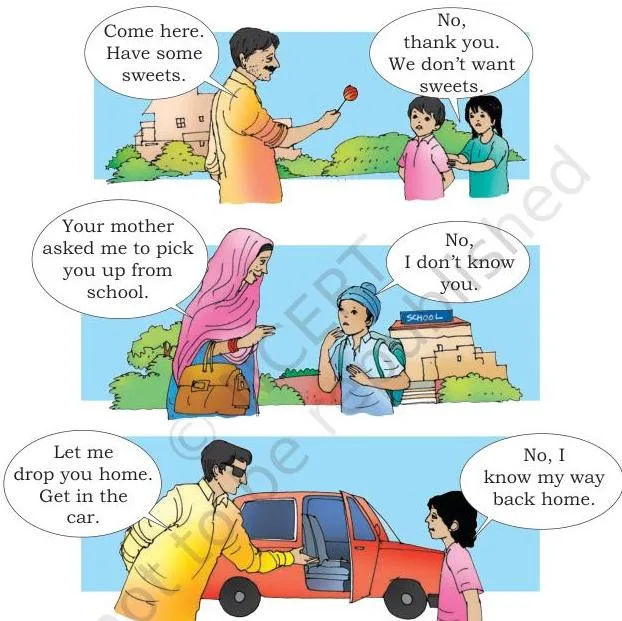
- Play only in safe places, and never interact with strangers unless a parent or trusted adult is with you (pp. 116–117).
- Animals keep themselves clean too — monkeys groom, birds clean their feathers (pp. 112–113).
- Sleepiness, hunger and tiredness are your body’s signals, not just moods (p. 119).
- The chapter’s main tasks: the home-cleaner, the movement games, the two puzzles, the weekly health table and the 24-hour circle (pp. 112–120).
Related chapters and resources
Staying Healthy and Happy is chapter 9 of the Class 3 Our Wondrous World Environmental Studies book. To move around the book and the site:
- the Class 3 Environmental Studies book page lists every chapter of this book;
- the Class 3 hub gathers the book pages for the whole class;
- the previous chapter, Chapter 8, and the next chapter, Chapter 10, continue the same book;
- if you prefer revision-style notes, the Class 3 Environmental Studies notes page covers the chapters, the Class 3 notes hub groups notes for each subject, and the full notes index spans Classes 3 to 12;
- related note pages include Food We Eat and Things Around Us.
The official NCERT textbook portal at ncert.nic.in publishes every Class 3 book free — the download link at the top of this page opens the chapter there.
| What the chapter holds | Count | Where it is used |
|---|---|---|
| Printed pages | 12 | |
| Figures with NCERT captions | 14 | |
| Tables | 2 | |
| Activities | 4 | |
| Official NCERT PDF | Download the chapter PDF | the chapter exactly as NCERT publishes it |
Reference: NCERT Class 3 Environmental Studies textbook, chapter 9, official edition on ncert.nic.in.
Sources and data verification
Four plain facts about what this page describes:
- The figures on this page describe the NCERT Class 3 Environmental Studies textbook, Our Wondrous World, in English, in its current NCERT edition. Chapter 9, Staying Healthy and Happy, spans printed NCERT pages 108 to 120.
- This page covers chapter 9 of that book only — not the full CBSE syllabus, and not other Class 3 books.
- The academic session this listing is maintained for is the one named at the top of this page.
- NCERT settles textbooks, editions and official PDFs; CBSE settles curriculum, syllabus and examinations. A chapter appearing in an NCERT textbook does not prove that every part of it is examinable — check the current official syllabus on the CBSE website.
Frequently asked questions
What daily habits does Class 3 EVS Chapter 9 Staying Healthy and Happy ask us to follow?
The chapter tracks seven daily habits — brushing twice, taking a shower, combing your hair, washing hands with soap, keeping nails trimmed and clean, drinking 6–8 glasses of water and sleeping at least 8 hours — on NCERT pages 109–110. Its check list adds rinsing your mouth after every meal and using soap after the toilet and after coming home from outdoors.
What is datun and which trees does the chapter mention for cleaning teeth?
A datun is a fresh twig chewed into a brush to clean teeth — an Indian hygiene tradition. The chapter names neem, karanj and babool twigs, and says the modern idea of brushing came from this tradition (pp. 111–112). Moyna’s Dadu finds the neem twig bitter, but the babool twig tastes better (p. 110).
How do I make the orange and lemon peel home cleaner from this chapter?
Collect peels of 8–12 oranges or lemons (enough to fill a half-litre jar), add ten whole cloves or 2–3 bay leaves if you like, and pour in two cups of white vinegar to cover them. Close the lid, keep the jar in a sunny spot for about two weeks, shake it occasionally, then strain.
A cup of the liquid mixed into a bucket of water cleans floors and bathrooms (p. 112).
Which games are hidden in the I Spy puzzle in this chapter?
The book’s teacher note on p. 120 gives ten answers: badminton, basketball, cricket, football, gymnastics, hockey, kabaddi, khokho, tennis and volleyball. Football runs left to right in the second-last row of the grid and kabaddi in the last row; the rest are hidden across and down.
Which places does the chapter say are safe and unsafe for playing?
The chapter treats a park and a schoolground as safe, and a busy road, a roof without railings and a construction site as unsafe (p. 117). It adds: do not interact with strangers unless you are with a parent or a trusted adult, and pay attention to your surroundings while playing (pp. 117–118).
Is the weekly health table in this chapter counted as assessment?
Yes — the teacher’s note on p. 119 says completing the table is a form of assessment for the chapter. The point is to spot patterns connecting sleep, diet and exercise with feeling good, so fill it in day by day rather than from memory.
Explore Class 3 Environmental Studies Books
- Previous: Food We Eat
- Next: Things Around Us
Related chapters:
- Our Families and Communities
- Going to the Mela
- Celebrating Festivals