
The Music Class 3 chapter — Chapter 6 of the NCERT Class 3 Arts book Bansuri-I, English medium — is a short, song-based chapter built around the National Anthem and a listening activity about the sounds around us.
It runs about four printed pages and holds no long passages of text to work through: the business of the chapter is singing, listening and noticing. The official NCERT PDF is right here, with a plain guide to what is inside the chapter.
If you want the chapter in its original printed form, download the Music Class 3 Bansuri-I Chapter 6 PDF from the official NCERT textbook page on ncert.nic.in.
Music Class 3 chapter at a glance
The table below lists the chapter’s sections and contents at a glance.
This is a song-and-listening chapter, not a text-heavy one: its contents are the National Anthem lyrics, guidance for the teacher, a sounds-and-music activity and two short notes. The chapter’s tasks are singing and noticing sounds rather than working through written exercises.
What the Music chapter contains
For a book chapter, order matters: this one moves from teaching guidance to the anthem itself, then to an activity about sound. Here is the chapter as it appears in the printed book.
| Section | NCERT pages | What it holds |
|---|---|---|
| For the Teacher | 40-41 | Practical guidance: practising songs at home, bringing festival songs into class, listening to music from different parts of the country, and small ideas such as playing a melody instead of ringing a school bell. |
| Lyrics | 42 | The full National Anthem Jana Gana Mana, with the composer and language named, plus side prompts about feelings, school songs and other music. |
| ACTIVITY 2 — Sounds and Music | 43 | A listening task: the sounds around us, the observation that each one is unique, and a ‘write them below’ prompt for sounds the child hears. |
| Do You Know (two notes) | 42 and 43 | One note explains what a national anthem is and the stand-up rule; the other explains what makes music — melody and rhythm. |
The book points to QR-code audio and video resources for most songs and activities (NCERT p. 41). Beside the lyrics, side prompts ask how you feel while singing the National Anthem, invite you to listen to and sing your school song or prayer, and ask what other types of music you know (NCERT p. 42).
The National Anthem: the heart of the chapter
A music book opens with the National Anthem for a simple reason: it is the one song every child knows, and the book turns it into the first song a class sings together. The chapter prints the full lyrics of Jana Gana Mana and uses them to teach what a national anthem is.
| Fact | The chapter’s answer | NCERT page |
|---|---|---|
| What a national anthem is | The official song of a country, played at important events | 42 |
| Who composed Jana Gana Mana | Rabindranath Tagore | 42 |
| Language it was written in | Bangla | 42 |
| What we do when it is played | We must always stand up, as a mark of respect for the country | 42 |
The Do You Know note beside the lyrics explains the stand-up rule directly: whenever the National Anthem is played, we must always stand up as a mark of respect for the country (NCERT p. 42). The prompt that asks how you feel while singing it makes the anthem personal — a chance to notice your own feelings about the song.
Sounds and music: what Activity 2 asks
Activity 2 carries the chapter’s one real idea, and it starts with a distinction: there are sounds all around us, but not every sound is music. The activity names eight everyday sounds and asks you to notice that each one is unique.
- the sound of rain
- the chirping of birds
- the moving of trains
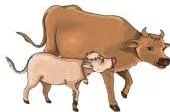
- the moo of a cow
- the rustling of leaves
- the sounds of bells from places of worship
- the sounds of prayers from places of worship
- the different types of drums — dumroo, pakhavaj, dhol and manjeera
After the list, the chapter asks whether you noticed that each of these sounds is unique, then invites you to think of other sounds in your surroundings and write them in the space below (NCERT p. 43).
The Do You Know note on the same page gives the chapter’s definition of music: some sounds can become music, and what makes music is melody and rhythm that is pleasant to your ears and enjoyable (NCERT p. 43). In one sentence: a sound becomes music when it carries melody and rhythm that are pleasant and enjoyable.
Try this tonight: sit quietly for five minutes at home and list five sounds you hear — a ceiling fan, a dog barking, water running, footsteps, the television. Mark which ones already carry a tune or a beat and could become music, and which are only sounds. That is exactly the ‘write them below’ task the activity sets.
If the beat part of music interests you, the Class 3 Arts notes on Feel the Rhythm — Ta Ka Ta Ki Ta carry the same idea further.
Words and ideas to remember
The chapter has no formal glossary — these are the working words it expects you to know. Read each one together with the page that introduced it.
| Word or idea | What the chapter means by it | NCERT page |
|---|---|---|
| National Anthem | The official song of a country, played at important events; we stand as a mark of respect | 42 |
| Melody and rhythm | The two qualities that make sound into music — a tune that is pleasant to the ears and enjoyable | 43 |
| Dumroo, pakhavaj, dhol, manjeera | The four drums named together in Activity 2 as the different types of drums around us | 43 |
What children mix up about the anthem and music
Three small mix-ups come up with this chapter, and each one is easy to fix when you know what the book actually says.
| Mistake | What the chapter says | How to check yourself |
|---|---|---|
| Not standing when the National Anthem plays | We must always stand up as a mark of respect for the country (NCERT p. 42) | If the anthem starts, stop what you are doing and stand until it ends. |
| Calling every sound ‘music’ | Sound becomes music only with melody and rhythm that are pleasant and enjoyable (NCERT p. 43) | Ask: does it have a tune and a beat I enjoy? If not, it is a sound, not music. |
| Guessing Jana Gana Mana was written in Hindi | The book labels the language as Bangla and names Rabindranath Tagore as the composer (NCERT p. 42) | Read the labels under the title: composer — Rabindranath Tagore, language — Bangla. |
How teachers use this chapter in class
Class 3 arts is a participation subject, so this chapter is about doing things rather than memorising. The teacher guidance shows what you can expect in class:
- practise at home what you learn in the classroom (NCERT p. 40);
- learn songs you sing at home during festivals and celebrations and bring them into the classroom (NCERT p. 40);
- listen to and enjoy music of different genres from different parts of the country, and talk about the voices, instruments, languages and styles you hear (NCERT p. 41);
- join Activity 2 and write the sounds you hear around you (NCERT p. 43);
- use the QR-code audio and video resources that come with the songs and activities (NCERT p. 41).
A try-this idea from the book: instead of ringing a school bell between classes, play a melody (NCERT p. 40).
Because festival songs come into the classroom, the Class 3 Arts notes on festivals, occasions and celebrations connect directly to this chapter. The value of this work is joining in and noticing, not memorising facts for a test.
Music chapter: quick recap
Five facts carry this chapter. If you can say each one in your own words, you have it.
- The chapter opens with guidance for teachers on bringing songs into the classroom (NCERT pp. 40-41).
- It prints the National Anthem Jana Gana Mana, composed by Rabindranath Tagore in Bangla (NCERT p. 42).
- A national anthem is the official song of a country, and we must always stand up when it is played as a mark of respect (NCERT p. 42).
- Activity 2 lists sounds all around us — from the sound of rain to the manjeera — and notes that each sound is unique (NCERT p. 43).
- Music is sound with melody and rhythm that is pleasant to the ears and enjoyable (NCERT p. 43).
Related chapters and official resources
This listing is maintained for the 2026-27 academic session using the NCERT textbook information available to us. NCERT remains the authority for confirming the latest edition.
Use the links below to move around the Class 3 Arts book and the notes that go with it.
- Bansuri-I — Class 3 Arts book page
- Chapter 5 of Bansuri-I (previous chapter)
- Chapter 7 of Bansuri-I (next chapter)
- Class 3 hub
- Class 3 Arts notes
- Class 3 notes hub
- CBSE notes home
The authoritative source for the textbook and its official PDF is the NCERT portal — the download link at the top of this page opens the Bansuri-I textbook page there.
Sources and data verification
- This page describes the NCERT Class 3 Arts textbook Bansuri-I (English medium), Chapter 6 ‘Music’, official edition on ncert.nic.in.
- It covers the NCERT textbook only — it is not a listing of the full CBSE scheme of studies.
- It is maintained for the current academic session using the NCERT edition listed above.
- NCERT settles textbooks, editions and PDFs; CBSE settles curriculum, syllabus and examinations. Textbook contents and the examinable syllabus are not always identical, so check the current official syllabus.
| What the chapter holds | Count | Where it is used |
|---|---|---|
| Printed pages | 4 | |
| Figures with NCERT captions | 1 | |
| Official NCERT PDF | Download the chapter PDF | the chapter exactly as NCERT publishes it |
Reference: NCERT Class 3 Arts (Bansuri-I) textbook, chapter 6, official edition on ncert.nic.in.
Music Class 3 chapter: common questions
Who wrote the National Anthem Jana Gana Mana?
Rabindranath Tagore. The chapter prints the full lyrics of Jana Gana Mana and labels it with the composer’s name and the language, Bangla (NCERT p. 42).
Why do we stand up when the National Anthem is played?
Because the National Anthem is the official song of the country, played at important events. Whenever it is played, we must always stand up as a mark of respect for the country (NCERT p. 42).
What is the difference between sound and music?
Sounds are all around us, and each sound is unique. Some sounds become music when they carry melody and rhythm that are pleasant to your ears and enjoyable (NCERT p. 43).
Which drums are named in the Class 3 Music chapter?
The chapter names four: dumroo, pakhavaj, dhol and manjeera. They appear together in Activity 2 as the different types of drums we hear around us (NCERT p. 43).
Where can I find the official Class 3 Bansuri-I Music chapter PDF?
Use the download link at the top of this page — it opens the official NCERT textbook page for Bansuri-I, where the chapter PDF is hosted. You can also reach it by searching the NCERT portal, ncert.nic.in, for the Class 3 Bansuri-I textbook.
Explore Class 3 Arts Books
- Previous: Festivals, Occasions, and Celebrations
- Next: FEEL THE RHYTHM ta ka ta ki Ta
Related chapters:
- Visual Arts
- Plants in Art
- Animals in Art