
Chapter 1, “Exploration: Entering the World of Secondary Science”, opens the NCERT Class 9 Science textbook Exploration. It is a seven-page chapter about how science works before any of the science itself: how curiosity becomes questions, questions become measurements, and measurements become models, predictions and estimates.
The official NCERT PDF is offered right here, and below it is a plain-language walkthrough of everything the chapter teaches.
You can Download the official Exploration: Entering the World of Secondary Science Class 9 PDF from the NCERT textbooks portal — the complete opening chapter of the book, free and in its original layout, with every photograph, activity and worked example. The NCERT portal is the authoritative source for the current Class 9 Science textbooks.
Chapter 1 at a Glance
The table on this page lists what the chapter holds — its sections, its photographs, its worked examples and its exercise questions.
What the numbers cannot show: Chapter 1 is the doorway of the book. Its pages carry a frame of a magnifying glass and a compass — a promise that exploration means observing carefully and asking direction-bearing questions, with a sense of where an idea stops applying.
The chapter is built around photographs rather than diagrams, and instead of ending with a block of exercises it closes with an invitation to explore. Its questions live inside the text, in the Pause and Ponder prompts and Activity 1.1.
What This Chapter Covers
This is a follow-along tour in the book’s own order. Open the PDF and move through the chapter stop by stop — every heading below is the book’s own heading.
- The opening argument. Science is not only what we know but how we know it — how observations become measurements, patterns become symbols and equations, and ideas get tested, revised or discarded. The magnifying glass and compass frame is introduced here.
- Simplifying the stars. Physicist Meghnad Saha studied starlight without modelling every atom inside a star. He treated the star as a hot gas and kept only temperature, pressure and ionisation — enough to link a star’s colour to its temperature. Example 1.1, the cricket shot, makes the same choice: keep the ball’s mass, speed and direction; ignore the bat’s brand, the ball’s colour and the grass.
- Activity 1.1: Let us model. Model the time it takes to ride a bicycle from school to home. Decide what matters, what does not, and why ignoring details is useful.
- Scientific language, symbols and units. Everyday words such as force, work, cell and reaction carry precise scientific meanings. Quantities get symbols — m, v, F, I — each with a defined unit, and mathematics acts as a language for thinking, not a hurdle.
- Why is the speed of light denoted by ‘c’? From the Latin celeritas, meaning speed. The speed of light is a physical constant, defined to be exactly \(299792458\ \text{m/s}\).
- Airplane fuel miscalculation. A passenger aircraft ran out of fuel mid-flight because the crew mixed up pounds per litre with kilograms per litre: the flight needed 22,300 kg of fuel and was about 15,000 litres short. Standard SI units exist to prevent exactly this.
- Why is a kilogram used everywhere? Buying rice or vegetables depends on a kilogram meaning the same amount everywhere (Fig. 1.1, the pan balance). Agreed international standards keep measurement fair and comparable.
- Laws, theories, principles, predictions. A law describes a regular pattern (Newton’s laws — the jerk when a bus stops). A theory explains why the pattern occurs (atomic theory — how molecules form). A principle is a broad idea applied to a situation (conservation of energy on the stairs). Example 1.2 makes “the clouds look dark” testable with past sky conditions, humidity above 80 per cent, wind speed and direction, and temperature drop.
- Why do weather forecasts sometimes go wrong? Tiny differences in temperature, pressure, humidity and wind grow over time. Forecasts are trustworthy for hours or a few days, less certain further out — and when predictions fail, scientists revise on evidence rather than opinion.
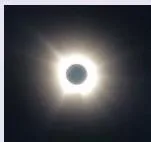
- Checking ‘viral’ claims: the eclipse food myth. “Don’t eat during an eclipse” collapses under simple questions: an eclipse is only a play of shadows (Fig. 1.2), and no physical, chemical or biological mechanism changes food.
- Estimation: the rice problem and the air-breathing example. For a family of four, how much rice for a month? An average adult needs about 2000 to 2500 kilocalories (kcal) a day; 100 g for a month is clearly too little, a few tonnes far too much (Fig. 1.3). Example 1.3 estimates daily air intake at about 10,000 litres by multiplying breaths per minute by volume per breath, then cross-checks to about 8,640 litres another way.
- Pause and Ponder. The chapter stops three times to make you think before reading on. The prompts ask whether a family prediction was evidence-based, when approximate answers are good enough, and how to map a real object or problem across the branches of science.
- Branches of science, and the Next Level Up boxes. Physics, chemistry, biology and earth science are divisions we make to organise knowledge — nature has no such boundaries. The Next Level Up boxes preview what Grades 9 and 10 explore.
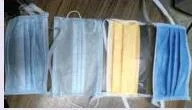
- How does a mask really work? A surgical mask needs physics (particle motion, electrostatic attraction), chemistry (polymer fibres), biology (virus size and behaviour) and mathematics (airflow and filtration) (Fig. 1.4). The chapter closes by calling science a human activity — curiosity, creativity, collaboration, careful questioning — and inviting you to explore.
The Core Ideas of This Chapter
This chapter has no formulas to memorise. Its five ideas are tools you will use in every later chapter of Class 9 Science — and recognising them now makes the rest of the book easier.
What a model is, and why ignoring details is a skill
A model is a simplified picture of a real system that keeps only what matters for the question being asked.
Meghnad Saha’s study of starlight is the chapter’s first example. He did not try to model every atom, reaction and movement inside a star; instead he treated the star’s matter as a hot gas and kept only temperature, pressure and how atoms formed ions. That was enough to explain why a star’s colour is tied to its temperature.
The cricket-shot example (Example 1.1) makes the same choice. To ask whether the ball will cross the boundary without touching the ground, the ball’s mass and the speed and direction of the hit matter. The bat’s brand, the ball’s colour and the grass do not.
Air resistance, spin and the seam stitching do have effects, but small ones — a simple model ignores them, and a more complex model adds them back for greater accuracy.
Now try it yourself — this is exactly what Activity 1.1 asks. To model the time of a bicycle ride home, keep the distance and your average speed; ignore the bicycle’s colour, the type of bell and the brand of tyres, because none of them changes the time.
In biology, cells are drawn as simplified diagrams that keep only the parts a question needs — the Class 9 notes on the cell chapter work with exactly that kind of model.
The sentence to remember: the book says outright that these choices are deliberate, not mistakes. Ignoring details is a skill because it keeps a system simple enough to think about — and a simple model can always be extended when you need greater accuracy.
Law, theory, and principle: three precise words
Everyday language and scientific language drift apart, and this is where. The chapter gives each word a precise job:
| Word | What it sounds like in everyday talk | What it means in science |
|---|---|---|
| Law | A rule someone made up | A regular pattern observed in nature, often written as a mathematical relationship — Newton’s laws explain the jerk felt when a bus stops suddenly |
| Theory | A guess or opinion | An evidence-based explanation of why a pattern occurs, built on tested evidence — atomic theory explains how molecules form |
| Principle | A general belief | A broad idea applied to make sense of a particular situation — the principle of conservation of energy when you climb stairs |
In science a theory is not a guess: it is an explanation based on careful testing and critical examination, and it stays open to revision as new evidence arrives. That openness is a big part of why science is reliable.
Predictions that can be tested
A prediction is a reasoned expectation based on evidence, and its job is to be checked. Example 1.2 shows how a vague claim turns scientific.
“It will rain this afternoon because the clouds look dark” only becomes testable with questions that demand measurable data and past patterns: what was the sky like the last time it rained, is humidity above 80 per cent, what are today’s wind speed and direction, is the temperature dropping as it did before the recent rains?
Try the same move on an everyday claim: “The bus will be late today.” Make it testable by asking — which bus? Late compared with what (the printed timetable)? How often was it on time last week? Does rain on this route usually mean late? Each question converts a feeling into something you could record and check.
Why do forecasts still go wrong? Weather depends on many changing factors, and very tiny differences in temperature, pressure, humidity and wind can grow over time into very different weather. That is why forecasts are reliable for a few hours or a few days but less certain further out.
When a prediction fails, scientists re-examine assumptions, models and measurements — that revision is how science gets stronger.
Estimation: rough answers that tell you if you are close
Before exact calculation, science asks whether an answer is even plausible. Estimation is the skill of getting close on purpose — the chapter’s air-breathing example (Example 1.3) reveals a repeatable method:
- State your assumptions. At rest we take about 12–15 breaths a minute; a typical inflated rubber party balloon holds about 2 litres and takes 4–5 breaths to fill, so one breath is roughly half a litre.
- Break the problem into pieces you can estimate. There are \(60 \times 24 = 1440\) minutes in a day, so about 20 thousand breaths a day, each about \(0.5\) litre — roughly \(10{,}000\) litres of air a day.
- Cross-check by a second route. You can fill about 3 balloons a minute: \(3 \times 2 \times 1440 = 8640\) litres. For estimation purposes, 8,640 and 10,000 are comfortably close.
- Test plausibility with bounds. The rice problem does this: for a family of four for a month, 100 g is clearly too little and a few tonnes is far too much — the right answer sits between.
Worked estimate with new numbers: how many litres of water does a family of four use for bathing in a month? Assume one bucket holds about 15 litres and each person uses about two buckets a day. Then \(4 \times 2 \times 15 \times 30 = 3600\) litres a month.
Is that plausible? A typical household water tank holds about 1,000 litres, so 3,600 litres is three to four tankfuls a month — about 120 litres a day for four people. That sounds believable, and a water bill reading would confirm the ballpark.
Now the bounds: 360 litres a month would be too little for four people to bathe on, and 36,000 litres a month would fill a swimming pool. The true answer sits comfortably between — which is exactly how estimation works.
The chapter’s Pause and Ponder 2 asks you to find the line yourself: one situation where an approximate answer is good enough, and one where you need an exact value. Its closing point is worth keeping — science values careful reasoning perhaps more than accurate calculation.
One science, many branches
The real world does not arrive pre-sorted into physics, chemistry, biology and earth science. The chapter says these divisions are made by us to organise knowledge, and they are not independent of each other.
Its proof is the surgical mask — a single object that needs physics (particle motion and electrostatic attraction), chemistry (polymer fibres), biology (virus size and behaviour) and mathematics (airflow and filtration efficiency) at once: one object, four disciplines.
The Next Level Up boxes preview what Grades 9 and 10 explore, and the chapter points out that real problems — climate change, developing medicines, designing sustainable technologies — need several disciplines together. Science also connects with mathematics, technology, arts and social sciences.
Pause and Ponder 3 asks you to build this map yourself using a real object or problem, and the chapter suggests a traffic jam near your school. One honest map:
| Branch | What it contributes to the traffic-jam problem |
|---|---|
| Physics | Motion of vehicles, braking distance, fuel consumed while idling |
| Chemistry | The vehicle emissions released into the air |
| Biology | How breathing polluted air affects people’s health |
| Earth science | Fog, wind or rain changing visibility and slowing traffic |
| Mathematics | Counting vehicles and estimating how long the delay lasts |
The point of the exercise is to feel how artificial the subject boundaries are — one traffic jam, seen through five lenses, is still one problem.
How to Read the Chapter’s Figures



The chapter uses photographs, and each one carries a specific point. Here is what to look for in each.
Fig. 1.1: A vegetable seller using a pan balance — what fairness has to do with measurement
Notice the two pans. The balance compares goods against agreed standard masses, so a kilogram means the same amount in every market. This photograph is the chapter’s answer to “Why is a kilogram used everywhere?”: measurements rest on agreed international standards — not local objects or opinions — and that keeps trade fair and scientific results comparable.
Fig. 1.2: A total solar eclipse — the photograph that settles a food myth
The book includes two photographs of a total solar eclipse under the same caption. What both show is a play of shadows: the Moon blocks the Sun’s light and the sky darkens — and that is all. The chapter’s own test questions — does temperature change significantly? does food go bad if left in a shadow?
— find no physical, chemical or biological mechanism that could make food harmful.
Fig. 1.3: Rice being cooked on a gas stove — the estimation problem made visible
See the single cooking vessel and the one ingredient. This photograph turns a quantities question into a real kitchen scene: how much rice would feed a family of four for a month? The chapter’s move is to bound the answer — assume all calorie needs come from rice; find the calories in 100 g of cooked rice and scale up.
100 g for a month is clearly too little, a few tonnes far too much.
Fig. 1.4: A collection of surgical masks — one object, four sciences
Notice the layers visible on the masks. This single object is the chapter’s closing demonstration that subject boundaries are made by us: physics explains how particles move and how electrostatic attraction captures them; chemistry explains the polymer fibres; biology explains the size and behaviour of viruses; mathematics models airflow and filtration efficiency.
Key Definitions Used in This Chapter
The chapter warns that everyday words such as force, work, cell or reaction carry precise scientific meanings. This table fixes the precise meanings it uses, with the section where each appears so you can find it in the book.
| Term | Scientific meaning | Where the chapter uses it |
|---|---|---|
| Model | A simplified way of representing a real system, keeping only the details that matter for the question being asked | “Simplifying the stars”; Activity 1.1 |
| Assumption | A detail accepted as true for the purpose of a calculation or model | The rice problem — assume all calorie needs come from rice alone |
| Symbol | A letter standing for a quantity, always paired with a defined unit | Scientific language section — m, v, F, I |
| Unit | The defined standard in which a quantity is measured | Scientific language section |
| SI units | The agreed international standard units; using them everywhere avoids conversions and errors | “Airplane fuel miscalculation”; “Why is a kilogram used everywhere?” |
| Physical constant | A quantity defined to have one exact value everywhere | “Why is the speed of light denoted by ‘c’?” — exactly 299792458 m/s |
| Law | A statement describing a regular pattern observed in nature, often mathematical | Newton’s laws — the jerk when a bus stops |
| Theory | An evidence-based explanation of why a pattern occurs, open to revision | Atomic theory — how molecules form |
| Principle | A broad idea applied to make sense of a situation | Conservation of energy while climbing stairs |
| Prediction | A reasoned expectation based on evidence, designed to be checked | Example 1.2 and the weather forecast section |
Common Mistakes to Avoid in This Chapter
This chapter quietly corrects several wrong ideas — and these are the ones teachers most often catch. Fix them before the exam mindset sets in.
| Mistake | What the chapter says instead | How to check your answer |
|---|---|---|
| “A theory is just a guess.” | A theory is an evidence-based explanation built on careful testing — and always open to revision. | Ask: what evidence would change this theory? If none, it is not a scientific theory. |
| “Ignoring details when modelling is careless.” | The choices are deliberate — the chapter says they are not mistakes. | Ask: does this detail change the answer to my question? If not, it can be ignored. |
| “Eating during an eclipse is harmful.” | An eclipse is only a play of shadows; no physical, chemical or biological mechanism changes food. | Ask: what physical change does an eclipse cause? None that affects food. |
| “A wrong forecast means science is unreliable.” | Tiny differences in conditions grow over time; forecast limits are expected. Scientists revise on evidence. | Check the forecast’s range: reliable for hours or days, less certain further out. |
| “A rough estimate is just guesswork.” | Estimation uses assumptions, evidence and plausibility bounds. | State your assumptions and cross-check by a second route, as the chapter’s air example does. |
| “Kilograms and pounds are roughly the same.” | Pounds per litre versus kilograms per litre left an aircraft about 15,000 litres short of fuel. | Always confirm the unit before calculating — SI units avoid the conversion. |
How This Chapter Fits Into Your Class 9 Science
This chapter is different from the ones that follow: it builds habits, not answers. It is worth treating it that way.
- The chapter has no end-of-chapter exercise questions. Its thinking work lives in the three Pause and Ponder prompts and in Activity 1.1, and its worked examples — like the cricket shot and the rain prediction — model the reasoning style later chapters expect.
- The vocabulary it fixes — model, assumption, symbol, unit, SI units, law, theory, principle, prediction, estimation — is assumed quietly by the physics, chemistry and biology chapters that follow.
- When you move into those chapters, the Class 9 Science revision notes and the Class 9 revision hub continue from where this introduction leaves off.
One honest caution: textbook contents and the examinable syllabus are not always identical. Check the current official CBSE curriculum and syllabus to see what is examinable this session — no study page can promise you that.
What to Remember From Chapter 1
The chapter has no titled summary block, so here is the recap from its own claims:
- Science is about how we know, not just what we know.
- Models simplify on purpose: keep what answers the question, ignore the rest — and that is a skill, not carelessness.
- Science speaks a shared language of precise terms, symbols and units; SI units keep measurements comparable everywhere.
- Laws describe patterns, theories explain them, principles apply them — and theories are always open to revision.
- Predictions are reasoned expectations that must be testable; failed predictions drive better science.
- Estimate before you calculate — rough but plausible bounds catch errors.
- The branches of science are divisions of convenience; real problems cross them.
- Scientific thinking — curiosity, evidence, revision — is useful far beyond any classroom.
Related Chapters and Resources
This listing is maintained for the 2026-27 academic session using the NCERT textbook information available to us. NCERT remains the authority for confirming the latest edition.
Continue from here with the Class 9 Science book page, which holds the rest of this textbook’s chapters, or go up to the Class 9 hub for the full set of NCERT books. The broader CBSE revision notes collection holds study pages for the later chapters of Class 9 Science.
| What the chapter holds | Count | Where it is used |
|---|---|---|
| Printed pages | 7 | |
| Figures with NCERT captions | 5 | |
| Official NCERT PDF | Download the chapter PDF | the chapter exactly as NCERT publishes it |
Reference: NCERT Class 9 Science textbook, chapter 1, official edition on ncert.nic.in. The verified PDFs of all current NCERT textbooks are published on the official NCERT textbooks portal.
Sources and Data Verification
The content and figures on this page describe the NCERT Class 9 Science textbook Exploration, Chapter 1, official edition published on ncert.nic.in.
This page covers that one opening chapter; it does not attempt to describe every Class 9 science resource.
This listing is maintained for the current academic session using the NCERT information available to us.
NCERT settles textbooks, editions and official PDFs; CBSE settles curriculum, syllabus and examinations.
Frequently Asked Questions
Why is the speed of light denoted by the symbol c, and what is its exact value?
The symbol c comes from the Latin word celeritas, meaning speed — an international agreement, not a modern abbreviation. The speed of light is a physical constant, defined to be exactly \(299792458\ \text{m/s}\).
What is the difference between a law, a theory, and a principle in science?
A law describes a regular pattern observed in nature (Newton’s laws — the jerk when a bus stops). A theory explains why the pattern occurs, from evidence tested over time (atomic theory explains how molecules form). A principle is a broad idea applied to a situation (conservation of energy on the stairs).
In science, a theory is never a guess: it is an evidence-based explanation, open to revision.
Is it harmful to eat food during a solar eclipse?
No. An eclipse is only a play of shadows: the Moon blocks the Sun’s light and the sky darkens, and nothing physical, chemical or biological changes in food. The viral claim has no mechanism behind it.
Why do weather forecasts sometimes go wrong if science is reliable?
Weather depends on many changing factors, and very tiny differences in temperature, pressure, humidity and wind can grow over time into very different weather. Forecasts are therefore reliable for hours or a few days, but less certain further into the future.
When predictions fail, scientists revise their assumptions, models and measurements on the basis of evidence — that readiness to be corrected by nature is science’s strength.
How do you make a rough estimate in science, like the air-breathing example in the chapter?
Use the chapter’s four-step method: state your assumptions, break the problem into smaller pieces, cross-check by a second route, then test plausibility.
The air example assumes about 12–15 breaths a minute and about half a litre per breath (a 2-litre party balloon takes 4–5 breaths to fill), giving roughly \(10{,}000\) litres a day; the balloon cross-check gives about 8,640 litres — close enough for an estimate.
Does the first chapter of the Class 9 Science book have exercise questions?
No. Chapter 1 has no end-of-chapter exercise questions. Its thinking work sits inside the text — three Pause and Ponder prompts and Activity 1.1 — and its worked examples, such as the cricket shot and the rain prediction, show the reasoning style later chapters will expect from you.
Explore Class 9 Science Books
- Next: Cell: The Building Block of Life
Related chapters:
- Tissues in Action
- Describing Motion Around Us
- Exploring Mixtures and their Separation